 Please note this site is currently in beta mode while we finalise the data and test for bugs.
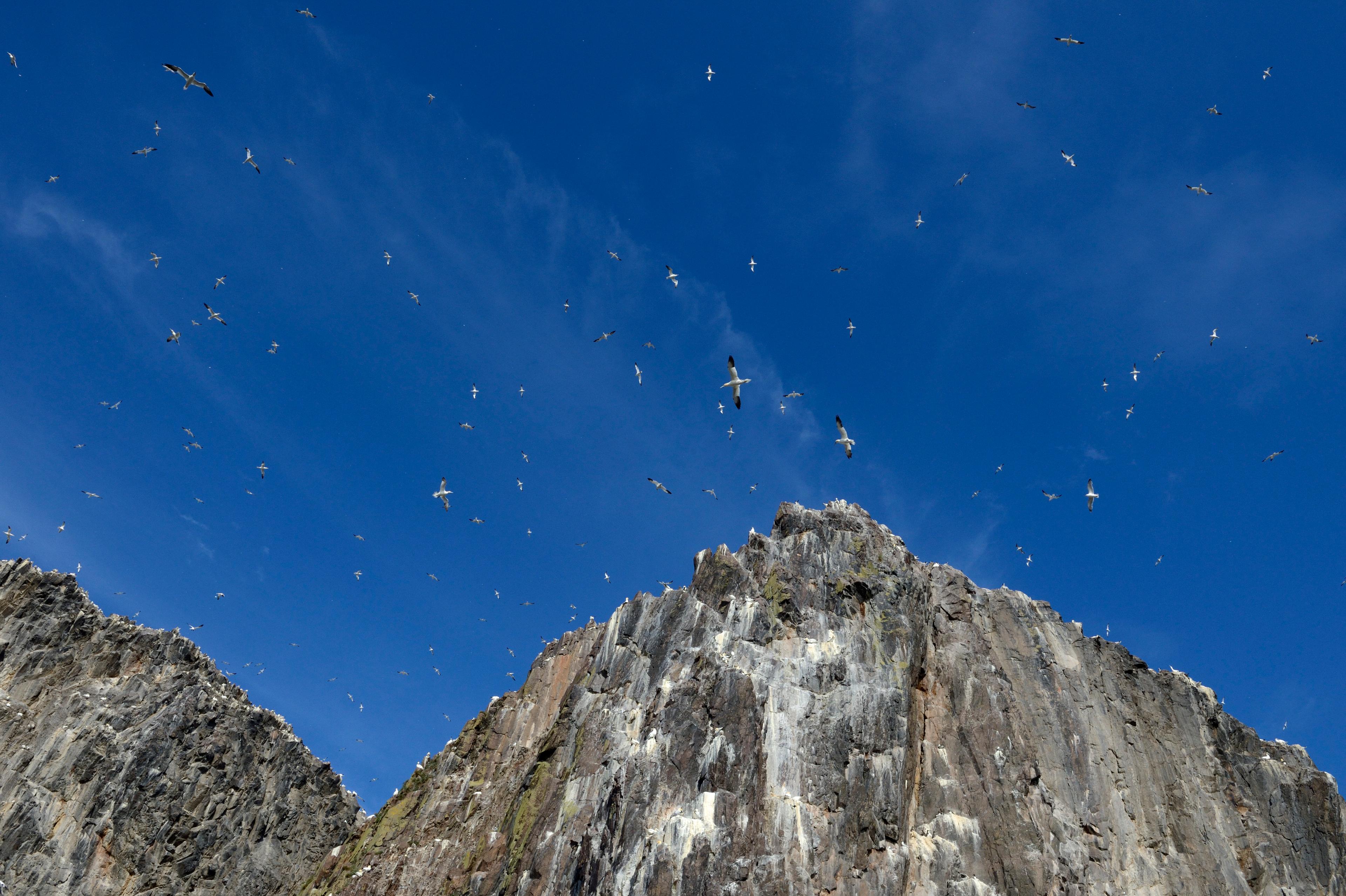 Copyright: Lorne Gill/NatureScot
Glossary
This glossary provides additional descriptive information to help explain the terminology used within FeAST.
General terms
- Pressure - A force acting upon the marine environment, for example organic enrichment.
- Pressure benchmark/definition - A defined description or degree at which a pressure is exerted.
- Sensitivity - The degree to which species or habitats are tolerant to change and their ability to recover when exposed to a given pressure.
- Tolerance - The ability to absorb or resist change or disturbance.
- Recovery - The ability to recover from disturbance or stress.
- Exposure - The degree to which marine habitats and species overlap with pressures or activities.
- Association - The association score describing whether an activity exerts each pressure or not. This score can also describe if a species or habitat is exposed to the pressure and activity. See ‘Activity’ – ‘Association’ for definitions.
Glossary
| Name | Information |
|---|---|
| Barrier to species movement | BenchmarkBarrier to species movement. DescriptionThe physical obstruction of species movements (local, regional, global), in rivers or open waters. May disrupt movements within and between roosting, breeding, feeding areas, or regional/global migrations (e.g. birds, eels, salmon, whales). Could be relevant to crabs that undertake migrations to over-winter or to breed, and species should be considered where populations are dependent on larval or other propagule supply from outside the site. ExamplesInfrastructure such as offshore wind farms, wave or tidal device arrays, tidal barrages and devices or dams, and mariculture could obstruct movements, as well as some fishing gears (set nets and drift nets). Intensive dredging and some disposal (e.g. sewage or industrial/liquid) activities can cause turbidity that may pose a physical barrier to fish movement; electromagnetic fields from power cables may also act as a barrier to some exclusively demersal species. NotesExcludes noisy activities which may cause barriers, as covered by separate pressures. Excludes fishing, other than by set net or drift net, and short-term/transient pressures like shipping and disposal. |
| Death or injury by collision above water | BenchmarkDeath or injury by collision above water. DescriptionInjury or mortality from collisions of biota with both static and/or moving structures above the surface of the water. Collision at night may be associated with 'Introduction of light' pressure that may attract some birds. Relevant for mobile species only. ExamplesCollision with rigs (e.g. birds) (static) or collisions with wind turbine blades. NotesDoes not include collision below water - see separate pressure. Excludes activities that may involve vessels for repairs only. OSPAR combines both above and below water collision pressures. |
| Death or injury by collision below water | BenchmarkDeath or injury by collision below water. DescriptionInjury or mortality from collisions of biota with both static and/or moving structures below the surface of the water, including vessels. Relevant for mobile species only. ExamplesFish, bird and mammal collisions with tidal devices, screens in intake pipes (e.g. fish at power stations) and shipping both recreational and commercial (moving vessels). NotesDoes not include collision above water - see separate pressure. Excludes activities that may involve vessels for repairs only. OSPAR combines both above and below water collision pressures. |
| De-oxygenation - EQS compliant | BenchmarkDissolved oxygen content compliant with the Water Framework Directive (WFD) criteria for good status. DescriptionDe-oxygenation is the lowering, temporarily or more permanently, of oxygen levels in the water or substrate due to anthropogenic causes. However, oxygen levels at this benchmark should not lead to negative impacts on features. Pressure is closely related to the nutrient enrichment pressure. The water column immediately above the seabed can have lower oxygen levels than the general water column, and this is closely linked to the organic enrichment and siltation rate changes pressures. The WFD good status for fully saline waters is 4 mg/l and within estuaries, the WFD standard for good status is 5 - (0.028 x salinity). The estuary standard is more precautionary as it also seeks to protect migratory fish, which are likely to be the most sensitive element. Oxygen is essential for most life, low levels can inhibit respiration, and other life functions. NotesAssociations exclude fishing discards, and activities that may cause siltation or discharge of deoxygenated ballast water as they are covered in other pressures (such as siltation rate changes). |
| De-oxygenation - long term | BenchmarkA decrease in dissolved oxygen compared to background levels, this may be a decrease in dissolved oxygen from one Water Framework Directive (WFD) status to another (for example from good to moderate, or moderate to poor, etc) sustained for a long term period, longer than one week. DescriptionThe lowering, temporarily or more permanently, of dissolved oxygen content in the water or substrate due to anthropogenic causes. Pressure is closely related to the nutrient enrichment pressure. The water column immediately above the seabed can have lower oxygen levels than the general water column, and this is closely linked to the organic enrichment and siltation rate changes pressures. The estuary standard is more precautionary as it also seeks to protect migratory fish, which are likely to be the most sensitive element. Oxygen is essential for most life, low levels can inhibit respiration, and other life functions. The dissolved oxygen content for WFD status of moderate for fully saline waters is 2.4 mg/l, poor is 1.6 mg/l, and bad is < 1.6 mg/l, for estuaries, moderate is < 3 - (0.017 x salinity), poor is 2 - (0.011 x salinity), and bad is < 2 - (0.011 x salinity). ExamplesAquaculture may cause deoxygenation close to the seabed due to waste and debris deposition, disposal activities can also reduce oxygen levels. NotesAssociations exclude fishing discards, and activities that may cause siltation or discharge of deoxygenated ballast water as either not likely to cause pressure at benchmark or covered in other pressures (such as siltation rate changes). |
| De-oxygenation - short term | BenchmarkA decrease in dissolved oxygen compared to background levels, this may be a decrease in dissolved oxygen from one Water Framework Directive (WFD) status to another (for example from good to moderate, or moderate to poor, etc) for a short term period of no longer than one week. DescriptionDe-oxygenation is the temporary lowering of dissolved oxygen content in the water or substrate due to anthropogenic causes. Pressure is closely related to the nutrient enrichment pressure. The water column immediately above the seabed can have lower oxygen levels than the general water column, and this is closely linked to the organic enrichment and siltation rate changes pressures. The estuary standard is more precautionary as it also seeks to protect migratory fish, which are likely to be the most sensitive element. Oxygen is essential for most life, low levels can inhibit respiration, and other life functions. The dissolved oxygen content for WFD status of moderate for fully saline waters is 2.4 mg/l, poor is 1.6 mg/l, and bad is < 1.6 mg/l, for estuaries, moderate is < 3 - (0.017 x salinity), poor is 2 - (0.011 x salinity), and bad is < 2 - (0.011 x salinity). ExamplesAquaculture may cause deoxygenation close to the seabed due to waste and debris deposition, disposal activities can also reduce oxygen levels. NotesAssociations exclude fishing discards, and activities that may cause siltation or discharge of deoxygenated ballast water as they are covered in other pressures (such as siltation rate changes). |
| Electromagnetic changes | BenchmarkLocal electric field of 1 V/m, or local magnetic field of 10 ?T due to anthropogenic means. DescriptionLocalised electric and magnetic fields could alter behaviour (e.g. attract or repel) and migration patterns of sensitive species. Elasmobranch species (sharks, skates and rays) are relatively sensitive to electric fields, and diadromous species are expected to have relatively higher sensitivity to magnetic fields. ExamplesAny activities with operational power cables or telecommunication cables (if equipped with power relays), and infrastructure that may create electromagnetic changes, e.g. electromagnetic surveys (CSEM) used in oil and gas. Field strength dissipates quickly, and burial of cables increases distance between source and species receptors, so is an effective mitigation. NotesScientific uncertainty on the sensitivity of species to this pressure is considerable, from individual physiology/behaviour to any population level implications. |
| Emergence regime changes - local | BenchmarkA one hour change in the time covered or not covered by the sea for a period of one year. DescriptionChanges in water levels may reduce the intertidal zone (and the associated/dependent habitats) by changing either the spatial area and or duration of immersion/exposure during tidal cycles. Changes in tidal flushing can change sediment dynamics that may lead to changing patterns of deposition and erosion and extent of tidal immersion. Impacts include reduced habitats, resources, feeding times, exposure, desiccation. ExamplesUpstream and downstream of a tidal barrage may change the extent of tidal immersion (reduce or increase respectively). Beach re-profiling could change gradients and therefore exposure times. Capital dredging, managed realignment, and salt marsh creation may change the natural tidal range. NotesThe benchmark is only relevant to the intertidal zone, excluding habitats below Chart Datum (CD). Excludes tidal 'turbines' but includes tidal barrage. Excludes wave devices as addressed in relation to habitat change (not effecting emergence regime per se). This excludes pressure from climate change sea level rise. |
| Genetic modification & translocation of indigenous species | BenchmarkTranslocation of indigenous species and/or introduction of genetically modified or genetically different populations of indigenous species that may result in changes in genetic structure of local populations, hybridisation, or change in community structure. DescriptionMoving of indigenous or genetically modified species to different areas may cause competition with local populations of species with different genetic make ups, alter the community of the receiving habitat, or provide the opportunity for hybridisation between similar species (e.g. Spartina spp. and Mytilus spp.). ExamplesDeliberate releases, movement or spawning of farmed species into wild via aquaculture, accidental escapes of farmed species, or transfer of organisms via vessels using ballast water. NotesExcludes transfer of organisms via vessel hulls (may be vector but no known evidence), sewage disposal or water extraction. |
| Hydrocarbon & PAH contamination - EQS compliant (includes those priority substances listed in Annex II of Directive 2008/105/EC) | BenchmarkCompliance with all average annual Environmental Quality Standards, or conformance with Probable Effect levels, Environment Assessment Criteria, Effects Range -Low. DescriptionThese standards provide good levels of protection for all living organisms where standards are adhered to. See separate pressures where exceeding EQS may occur and the potential ecological consequences include lethal and non-lethal effects, and physiological changes. These are naturally occurring compounds, with complex mixtures of two basic molecular structures: straight chained aliphatic hydrocarbons (relatively low toxicity and susceptible to degradation) and multiple ringed aromatic hydrocarbons (higher toxicity and more resistant to degradation). Ecological consequences include tainting, some are acutely toxic leading to carcinomas, growth defects. ExamplesThese compounds originate from three sources (includes both aliphatic and polyaromatic hydrocarbons): 1. petroleum hydrocarbons (from natural seeps, oil spills and surface water run-off), 2. pyrogenic hydrocarbons (from combustion of coal, woods and petroleum), and 3. biogenic hydrocarbons (from plants and animals). Notes
|
| Hydrocarbon & PAH contamination - exceeding EQS (includes those priority substances listed in Annex II of Directive 2008/105/EC) | BenchmarkHydrocarbon and PAH contamination that exceeds Environmental Quality Standards (EQS). For example, this may occur within the 100 m mixing zone (Water Framework Directive acceptable area of impact) from point source discharges, including chemical pollution from fish farms. DescriptionLong term Environmental Quality Standards (EQS) values must be complied with at the edge of mixing zones to protect the wider environment. Within the mixing zones there may be exceedance of the EQS. It can be difficult to fully quantify the risks to features within this mixing zone from EQS exceedance, as it is dependent on dilution modelling, chemical toxicity pathway of contaminant, ecotoxicology information of individual species (if available) and therefore are usually assessed on a case by case basis. Focus should be on increases in the levels of these compounds compared with background concentrations. These are naturally occurring compounds, complex mixtures of two basic molecular structures: straight chained aliphatic hydrocarbons (relatively low toxicity and susceptible to degradation) and multiple ringed aromatic hydrocarbons (higher toxicity and more resistant to degradation). Ecological consequences include tainting, some are acutely toxic and can cause carcinomas and growth defects. ExamplesThese compounds originate from three sources (includes both aliphatic and polyaromatic hydrocarbons): 1. petroleum hydrocarbons (from natural seeps, oil spills and surface water run-off) 2. pyrogenic hydrocarbons (from combustion of coal, woods and petroleum) and 3. biogenic hydrocarbons (from plants and animals). Water produced from oil and gas extraction and waste disposal and discharge may contain these compounds. Notes
|
| Hydrocarbon & PAH contamination - significant pollution incidents/accidental spills and/or bioaccumulation (includes those priority substances listed in Annex II of Directive 2008/105/EC) | BenchmarkHydrocarbon and PAH contamination that exceeds Environmental Quality Standards (EQS) due to significant accidental spills, or bioaccumulation. DescriptionIt can be difficult to fully quantify the risks to features from Environmental Quality Standard exceedance, as it is dependent on dilution modelling, chemical toxicity pathway of contaminants, ecotoxicology information of individual species (if available) and therefore are usually assessed on a case by case basis. Focus should be on increases in the levels of these compounds compared with background concentrations. These are naturally occurring compounds, complex mixtures of two basic molecular structures: straight chained aliphatic hydrocarbons (relatively low toxicity and susceptible to degradation) and multiple ringed aromatic hydrocarbons (higher toxicity and more resistant to degradation). Ecological consequences include tainting, some are acutely toxic, and can cause carcinomas, and growth defects. ExamplesThese compounds originate from three sources (includes both aliphatic and polyaromatic hydrocarbons): 1. petroleum hydrocarbons (from natural seeps, oil spills and surface water run-off) 2. pyrogenic hydrocarbons (from combustion of coal, woods and petroleum) and 3. biogenic hydrocarbons (from plants and animals). Water produced from oil and gas extraction and waste disposal and discharge may contain these compounds. Also, all activities associated with vessels may be sources of accidental spills or leakages. Notes
|
| Introduction of light or shading | BenchmarkChange (increase or decrease) in incident light via anthropogenic means. DescriptionIntroduction of light on structures may disorientate, repel or attract species (affecting e.g. migration routes), increase algal growth, change communities or species present. Shading from structures may reduce growth, feeding or change communities or species present. ExamplesInfrastructure such as a new promenade or pier lighting, lighting on oil and gas facilities, fish farms, construction of jetties or other artificial structures or vessels, and removal of dense kelp canopy will introduce increased light. Includes most nighttime vessel activity. The construction of any temporary or permanent artificial structure may also cause shading, such as a jetty. NotesThe introduction of light is unlikely to be relevant for most benthic invertebrates, except where it is possible to interfere with spawning cues, or where dense kelp canopy is removed. |
| Introduction of microbial pathogens (disease), viruses or parasites | BenchmarkThe introduction of relevant microbial pathogens, metazoan disease vectors, viruses or parasites to an area where they are currently not present or likely to cause a significant increase in levels compared to background levels. DescriptionThe introduction or increase in levels of pathogens, disease vectors, viruses or parasites from anthropogenic activities. ExamplesSources of disease, viruses and parasites could include untreated or insufficiently treated effluent discharges and run-off from terrestrial sources and vessels, including ballast water releases. Transfer of shellfisheries seed stock may introduce 'infected' seed, or from accidental releases of effluvia. Salmon farming may increase levels of the sea lice parasite (Lepeophtheirus salmonis), which has the potential to increase risks to wild salmonids. Farmed salmon escapees could be infected and spread pathogens in the indigenous populations. NotesThis does not include non-indigenous species as this is covered in a separate pressure (Introduction or spread of non-indigenous species & translocations). Excludes fishing/dredging for bivalves as low risk of spreading Bonamia. Excludes transfer vessel hulls as an introduction mechanism as no known evidence. |
| Introduction of other substances (solid, liquid or gas) | BenchmarkThe introduction of any substance (solid, liquid, or gas) that is not covered by other contaminant pressures, and/or the introduction of other solid debris, such as shell debris, that may cause changes to species or habitats. DescriptionThe 'systematic or intentional release of liquids, gases' is considered e.g. in relation to produced water from the oil industry. It should, therefore, be considered in parallel with the other chemical contaminants. This pressure includes compounds released as operational discharges, produced waters or spills from maritime (offshore/inshore) installations (e.g. oil and gas, renewables), mariculture, shipping and harbours etc. that are not assessed elsewhere. Other solid debris such as shellfish shells and seaweed debris may also have detrimental effects which are not covered in other pressures, and should be assessed here. ExamplesShellfish shell debris and seaweed debris from aquaculture may fall to seabed, also debris from longline equipment during rough weather or harvesting. Chemicals transported in bulk that may be spilt e.g. acetic acid, phosphoric acid, sulphuric acid, sodium hydroxide. Chemicals in drilling waste or produced waters e.g. barite, calcium carbonate, potash, zinc oxide. Natural products with varied uses, e.g. molasses (transported in bulk) but also glycerins, formalin etc. Fin-fish food supplements e.g. carotenoids, copper sulphate. Releases from munitions dumps e.g. chemical warfare agents, explosives, or propellants. |
| Introduction or spread of non-indigenous species & translocations | BenchmarkA significant pathway exists for introduction of one or more invasive non-indigenous species (INIS) (also referred to as Invasive Non-Native Species (INNS)). DescriptionThe direct or indirect introduction of invasive non-indigenous species (INIS), e.g. Chinese mitten crabs, slipper limpets, Pacific oyster and their subsequent spreading and/or competition with native species. Sensitivity assessments will be made against a prescribed list of INIS as agreed with the Scottish Marine Invasive Non-Native Species Working Group, with additional species added for marine birds. ExamplesAquaculture, mussel or shellfishery activities may cause this pressure due to imported stock or from accidental releases. Ballast water, hull fouling, and some infrastructure, e.g. offshore wind farms, may also facilitate the spread of such species by acting as stepping stones for spread. NotesA full list of INIS considered in FeAST is available in the glossary. |
| Litter | BenchmarkIntroduction of man-made objects able to cause physical harm (surface, water column, sea floor and/or strandline). DescriptionMarine litter is any manufactured or processed solid material from anthropogenic activities discarded, disposed or abandoned (excluding legitimate disposal) once it enters the marine and coastal environment including plastics, metals, timber, rope, fishing gear etc. and their degraded components, e.g. microplastic particles. This pressure also considers ghost fishing, whereby lost fishing nets/creels may cause entanglement and likely lead to mortality. ExamplesEcological effects can be physical (smothering), biological (ingestion, including uptake of microplastics; entangling; physical damage; accumulation of chemicals) and/or chemical (leaching, contamination from litter). NotesCurrently all activities are associated with this pressure as all have potential to introduce litter. Microplastics may be treated as a contaminant separately in future. |
| Nutrient enrichment - EQS compliant | BenchmarkCompliance with Water Framework Directive (WFD) criteria for good status. DescriptionConsiders the levels of the elements nitrogen, phosphorus, silicon and iron in the marine environment. It may be possible to use information from Water Framework Directive (WFD) and Coastal and Estuarine Management Plan (CEMP) assessments in relation to winter concentrations of Dissolved Inorganic Nitrogen (DIN) (a measure of state) and compare these to WFD standards and status classification outputs. Good status of saline waters is DIN < 15 ?M. Adverse environmental effects include deoxygenation, algal blooms, changes in community structure of benthos and macrophytes. ExamplesNutrients can enter marine waters by natural processes (e.g. decomposition of detritus, riverine, direct and atmospheric inputs) or anthropogenic sources (e.g. wastewater runoff, terrestrial/agricultural runoff, sewage discharges, aquaculture, dredge disposal, atmospheric deposition). Nutrients can also enter marine regions from upstream locations, e.g. via tidal currents to induce enrichment in the receiving area. NotesNutrient enrichment may lead to eutrophication and is closely linked with de-oxygenation and organic enrichment pressures. |
| Nutrient enrichment - exceeding EQS | BenchmarkNitrogen and Phosphorous enrichment that exceeds Environmental Quality Standards (EQS). For example, this may occur within the 100 m mixing zone (Water Framework Directive acceptable area of impact) from point source discharges, including pollution from fish farms. DescriptionLong term Environmental Quality Standard (EQS) values must be complied with at the edge of mixing zones to protect the wider environment. Within the mixing zones there may be exceedence of the EQS. It can be difficult to fully quantify the risks to features within this mixing zone from EQS exceedence, as it is dependent on dilution modelling amongst other factors, and therefore are usually assessed on a case by case basis. Increased levels of the elements nitrogen, phosphorus, silicon and iron in the marine environment compared to background concentrations. It may be possible to use information from Water Framework Directive (WFD) and Coastal and Estuarine Management Plan (CEMP) assessments in relation to winter concentrations of Dissolved Inorganic Nitrogen (DIN) (a measure of state) and compare these to WFD standards and status classification outputs. Good status of saline waters is DIN < 15 ?M. Adverse environmental effects include deoxygenation, algal blooms, changes in community structure of benthos and macrophytes. ExamplesNutrients can enter marine waters by natural processes (e.g. decomposition of detritus, riverine, direct and atmospheric inputs) or anthropogenic sources (e.g. waste water runoff, terrestrial/agricultural runoff, sewage discharges, aquaculture, dredge disposal, atmospheric deposition). Nutrients can also enter marine regions from upstream locations, e.g. via tidal currents to induce enrichment in the receiving area. NotesNutrient enrichment may lead to eutrophication, and is closely linked with de-oxygenation and organic enrichment pressures. Excludes seaweed harvesting, as this activity is more likely to reduce nutrient availability. Excludes activities disturbing sediment. |
| Nutrient enrichment - significant pollution incidents/accidental spills | BenchmarkNitrogen and Phosphorous enrichment that exceeds the Water Framework Directive (WFD) criteria for good status, due to significant accidental spills or releases. DescriptionIncreased levels of the elements nitrogen, phosphorus, silicon and iron in the marine environment compared to background concentrations that exceed the Water Framework Directive (WFD) criteria for good status, occuring due to significant pollution events via accidental spills or releases. It may be possible to use information from Water Framework Directive (WFD) and Coastal and Estuarine Management Plan (CEMP) assessments in relation to winter concentrations of Dissolved Inorganic Nitrogen (DIN) (a measure of state) and compare these to WFD standards and status classification outputs. Good status of saline waters is DIN < 15 ?M. Adverse environmental effects include deoxygenation, algal blooms, changes in community structure of benthos and macrophytes. ExamplesNutrients can enter marine waters by natural processes (e.g. decomposition of detritus, riverine, direct and atmospheric inputs) or anthropogenic sources (e.g. waste water runoff, terrestrial/agricultural runoff, sewage discharges, aquaculture, dredge disposal, atmospheric deposition). Nutrients can also enter marine regions from upstream locations, e.g. via tidal currents to induce enrichment in the receiving area. NotesNutrient enrichment may lead to eutrophication, and is closely linked with de-oxygenation and organic enrichment pressures. Excludes seaweed harvesting, as this activity is more likely to reduce nutrient availability. Excludes activities disturbing sediment. |
| Organic enrichment | BenchmarkA deposit of 100 gC/m2/yr. DescriptionThis pressure refers to particulate organic matter and is therefore closely associated with the siltation pressures. Adverse environmental effects include deoxygenation, algal blooms, changes in community structure of benthos and macrophytes. ExamplesResulting from the degraded remains of dead biota and microbiota (land and sea); faecal matter from marine animals; flocculated colloidal organic matter and the degraded remains of: sewage material, domestic wastes, industrial wastes etc. Organic matter can enter marine waters from sewage discharges, aquaculture or terrestrial/agricultural runoff. Black carbon is another source and comes from the products of incomplete combustion (PIC) of fossil fuels and vegetation. NotesDissolved organic matter is considered covered within the nutrient enrichment pressure. Organic enrichment may lead to eutrophication (see also nutrient enrichment). Excludes fisheries discards. |
| Physical change (to another seabed type) | BenchmarkThe permanent change of one marine habitat type to another marine habitat type, through the change in substratum, including to artificial substrate (e.g. concrete mattresses, rock dumping). DescriptionTwo separate possibilities 1) Change in sediment type by one Folk class, 2) Change from sedimentary or soft rock substrata to hard rock or artificial substrata or vice-versa. A change from sediment to hard rock (or vice versa) would affect all types of substratum, and all habitats would be assessed as highly sensitive. ExamplesAssociated activities include the installation of infrastructure (e.g. surface of platforms or wind farm foundations, marinas, coastal defences, pipelines and cables), the placement of scour protection where soft sediment habitats are replaced by hard/coarse substratum habitats, removal of coarse substrata (marine mineral extraction) in those instances where surficial finer sediments are lost, capital dredging where the residual sedimentary habitat differs structurally from the pre-dredge state, creation of artificial reefs, mariculture i.e. mussel beds, protection of pipes and cables using rock dumping and mattressing techniques. Includes dredge and heavy trawl fisheries due to potential change in sediment particle size. NotesThis pressure assumes a permanent change, while short-term smothering of substrata with sediment is addressed under siltation pressures. The simplified Folk class referred to in the benchmark is based on the simplified classification with five classes used for UK SeaMap as described by Long (2006). |
| Physical loss of existing marine habitat | BenchmarkPermanent loss of existing marine habitat to land or coastal infrastructure. DescriptionThe permanent loss of marine habitats by activities or infrastructure that encroaches on the marine area that may move the Mean High Water Springs (MHWS) mark seawards. This pressure is primarily relevant to intertidal species, however, depending on the depth profile of the shore, it is still possible to impact subtidal species. ExamplesThis pressure is relevant to coastal activities such as land claim, new coastal defences or ports/harbours that encroach on and move the Mean High Water Springs mark seawards. NotesThis excludes changes from one marine habitat type to another marine habitat type. |
| Physical removal (extraction of substratum) | BenchmarkExtraction of sediment up to 30 cm. DescriptionThis pressure relates to extraction of sediment substrate. ExamplesCapital or maintenance dredging, aggregate extraction, for beach replenishment and some construction processes requiring seabed preparation or dredging. NotesIn some cases the substrate may recover/be replenished by natural processes. If there is a permanent change in the substrate type, see also the physical change pressure. |
| Radionuclide contamination | BenchmarkAn increase in 10 µGy/h above background levels. DescriptionIntroduction of radionuclide material, raising levels above background concentrations. ExamplesSuch materials can come from nuclear installation discharges, and from land or sea-based operations (e.g. oil platforms, medical sources). The disposal of radioactive material at sea is prohibited unless it fulfils exemption criteria developed by the International Atomic Energy Agency (IAEA), namely that both the following radiological criteria are satisfied: (i) the effective dose expected to be incurred by any member of the public or ship's crew is 10 µSv or less in a year; (ii) the collective effective dose to the public or ship's crew is not more than 1 man Sv per annum, then the material is deemed to contain de minimis levels of radioactivity and may be disposed at sea pursuant to it fulfilling all the other provisions under the Convention. The individual dose criteria are placed in perspective (i.e. very low), given that the average background dose to the UK population is ~2700 µSv/a. Ports and coastal sediments can be affected by the authorised discharge of both current and historical low-level radioactive wastes from coastal nuclear establishments. |
| Reduction in availability or quality of prey | BenchmarkReduction in prey availability or quality of prey. DescriptionReduction in prey availability or quality of prey could be caused by competition (with e.g. other marine predators) or from pressures that affect prey species. Temporary or longer-term impacts can arise from construction, operational and decommissioning phases of infrastructure developments. Consequences include starvation, a poorer diet with knock on effects on energy budget and breeding etc. This pressure is relevant to mobile predators as well as benthic filter feeders. For filter feeders, competition with other filter feeders, via aquaculture or restoration, should be assessed here, as well as changes to distribution of plankton. The impact of harmful algal blooms may also be assessed here, where relevant. ExamplesIncreased organic waste, deoxygenation, and siltation from many activities may reduce diversity and abundance of prey species available and therefore nutrient value. Fishing or other activities can impact habitats or remove preferred species to levels that drive significant competition for resource or increase foraging areas and subsequent energetic costs. NotesSome prey species will have separate sensitivity assessments themselves e.g. sandeels. |
| Removal of non-target species (including lethal) | BenchmarkAccidental or incidental removal of features through pursuit of a target fishery, harvesting or other extractive activity (commercial, recreational or artisanal scale), including through accidental entanglement with nets or ropes e.g. aquaculture nets, mooring lines or creels. DescriptionAny damage, loss or removal of species through accidental or incidental catch (or by-catch) associated with fishing, harvesting and extraction activities, including extraction of substrate or water. Also includes accidental entanglement in ropes or lines associated with various activities. ExamplesMost commonly referred to as by-catch by commercial fisheries but can also apply to recreational and artisanal fisheries or collection of fish, shellfish or seaweed. Also relevant to incidental loss of species during removal of dredged material, aggregate or water (e.g. for power station cooling). Non-target species can be mobile, demersal or infaunal. Also applies to lethal entanglement of fish, mammals or birds by fishing gear, moorings or anti-predator nets. NotesThe physical effects of fishing gear on sea bed communities are not included, as are addressed by the abrasion pressure, and entanglement from litter or 'ghost fishing' from lost fishing nets/creels are considered under the litter pressure. |
| Removal of target species (including lethal) | BenchmarkRemoval of target species that are features of conservation importance or sub-features of habitats of conservation importance at a commercial, artisanal or recreational scale. DescriptionEcological consequences include the sustainability of populations, impacting energy flows through food webs and the size and age composition within populations, alteration to habitat structure, biodiversity or function. ExamplesFishing or collection of marine plants and animals, primarily fisheries and shellfisheries but also seaweed harvesting, collection of broodstock or seed/spat. Includes smaller scale harvesting, or species collection, angling and scientific sampling. NotesThis pressure addresses only the ecological effects of removal of species and not the effects of the removal process on the species, community or habitat itself e.g. excludes physical effects of fishing gear on seabed communities - these are addressed by the abrasion pressures. Excludes removal of wild seed for shellfish culture. |
| Salinity changes - local | BenchmarkIncrease from 35 to 38 units for one year or decrease in salinity by 4 to 10 units for a year. DescriptionActivities have the potential to increase or decrease local salinity through either input of fresh water or physical changes that may alter water exchange and therefore salinity. Changes to salinity can impact growth, respiration, behaviour, and reproduction, and may ultimately alter communities/habitats, particularly if in combination with other stresses such as temperature. ExamplesDischarges from pipelines, capital dredging if this alters the halocline/tidal exchange, erection of barrages, weirs that alter freshwater and seawater flow or exchange rates. NotesExcludes fin fish fresh water treatment for sea lice as not at benchmark (altering salinity for a year). Excludes carbon storage as salt cavern washings is not relevant to Scotland. This pressure is less likely to impact deeper subtidal species. |
| Siltation rate changes (heavy) | BenchmarkHeavy deposition of more than 5 cm and up to 30 cm of fine material added to the habitat in a single discrete event or continuous deposition of fine material. DescriptionSiltation (or sedimentation) is the settling out or deposit of silt or sediments suspended in the water column to the seabed. Changes relate to those over natural siltation and those above 5 cm (less than this depth is covered by different pressure), or where a high level of deposition is continuous (e.g. fish farming). Siltation of this level can completely smother species and habitats, particularly sessile organisms. Impacts are mainly from hypoxia, inability to feed or photosynthesise, and potentially death, unless a tolerant species or species that can re-emerge. ExamplesActivities associated with this pressure type include fin fish aquaculture, land claim, navigation dredging, aggregate extraction, cable and pipeline laying, drill cuttings, various construction activities, and waste disposal. NotesExcludes shellfish culture (shell/seaweed debris captured under introduction of other substances). Less than 5 cm cover is covered by the separate pressure, siltation rate changes (light). Note that the pressure benchmark of this pressure is different to that used by MarLIN. |
| Siltation rate changes (light) | BenchmarkLight deposition of up to 5 cm of fine material added to the seabed in a single event or continuous deposition of fine material. DescriptionSiltation (or sedimentation) is the settling out or deposit of silt or sediments suspended in the water column to the seabed. Changes relate to those over natural siltation and up to 5 cm (more than this depth is covered by different pressure), or where a light level of deposition is continuous (e.g. shellfish farming). Siltation of this level may completely smother smaller species and habitats, particularly sessile organisms. Effects can be hypoxia, physical difficulties in feeding, reproduction, reduction in photosynthesis and potentially death for more sensitive species. ExamplesActivities associated with this pressure type include shellfish farming/faeces/pseudofaeces, land claim, navigation dredging, aggregate extraction, cable and pipeline laying, drill cuttings, various construction activities and waste disposal. Also shipping propellor wash, towed bottom contacting fishing gear and various infrastructure during construction can cause siltation. NotesExcludes siltation changes greater than 5 cm, as this is covered by a separate pressure, siltation changes (heavy). Fin fish aquaculture is covered by siltation rate changes (heavy). Note that the pressure benchmark of this pressure is different to that used by MarLIN. |
| Sub-surface abrasion/penetration | BenchmarkDamage to species or habitats below the surface of the seabed. DescriptionAbrasion damage involving some degree of physical penetration to the seabed or disturbance of habitats or species below the surface of the seabed. Penetration and damage to the soft rock substrata are considered, however, penetration into hard bedrock is deemed unlikely. ExamplesThis pressure is associated with activities such as anchoring, certain fishing activities (e.g. scallop dredging, beam trawling), compression of sediment (e.g. jack-up barges and vehicles), taking of sediment/geological cores, cone penetration tests, cable burial (ploughing or jetting), and propeller wash from vessels. Notes1. OSPAR combines subsurface and surface abrasion/penetration into one single pressure. 2. Loss, removal or modification of the substratum is not included within this pressure (see the physical loss and physical change pressures). |
| Surface abrasion | BenchmarkDamage to species or habitats living on the seabed. Damage to surface features (e.g. species and physical structures within the habitat). DescriptionAbrasion damage at the surface of the substratum in sedimentary or rocky habitats e.g. epiflora and epifauna. ExamplesRecreational access and trampling (inc. climbing) by humans or livestock, vehicular access, moorings (ropes, chains), fishing gear such as pots or creels and demersal towed gear, cables and chains associated with fixed gears, objects placed on the seabed such as the legs of jack-up barges, and harvesting of seaweeds or other species (trampling). Notes1. OSPAR combines subsurface and surface abrasion/penetration into one single pressure. 2. Loss, removal or modification of the substratum is not included within this pressure (see the physical loss pressures). |
| Synthetic compound contamination (inc. pesticides, antifoulants, pharmaceuticals) - EQS compliant (includes those priority substances listed in Annex II of Directive 2008/105/EC.) | BenchmarkSynthetic compound compliance with all average annual Environmental Quality Standards (EQS), or conformance with Probable Effect levels, Environment Assessment Criteria, Effects Range -Low. DescriptionThe Environmental Quality Standards (EQS) standards provide good levels of protection for all living organisms where standards are adhered to. See separate pressures where exceeding EQS may occur and the potential ecological consequences include lethal and non-lethal effects, and physiological changes. ExamplesThese chemicals are synthesised from a wide variety of industrial processes and commercial applications (e.g. veterinary use/human consumption) and can include e.g. insecticides, herbicides, rodenticides, fungicides, pharmaceuticals, polychlorinated biphenyls (PCBs), with some being very persistent and often very toxic. Possible sources include fin-fish farms, accidental discharge from vessels, or disturbance of contaminants otherwise immobilised in the sediment. Notes1. See separate pressure for synthetic compound contamination - exceeding EQS. |
| Synthetic compound contamination (inc. pesticides, antifoulants, pharmaceuticals) - exceeding EQS (includes those priority substances listed in Annex II of Directive 2008/105/EC.) | BenchmarkSynthetic compound contamination that exceeds Environmental Quality Standards (EQS). For example, this may occur within the 100 m mixing zone (Water Framework Directive acceptable area of impact) from point source discharges, including chemical pollution from fish farms. DescriptionLong term Environmental Quality Standard (EQS) values must be complied with at the edge of mixing zones to protect the wider environment. Within the mixing zones there may be exceedance of the EQS. It can be difficult to fully quantify the risks to features within this mixing zone from EQS exceedance, as it is dependent on dilution modelling, chemical toxicity pathway of contaminant, ecotoxicology information of individual species (if available) and therefore are usually assessed on a case by case basis. ExamplesThese chemicals are synthesised from a wide variety of industrial processes and commercial applications (e.g. veterinary use/human consumption) and can include e.g. insecticides, herbicides, rodenticides, fungicides, pharmaceuticals, polychlorinated biphenyls (PCBs), with some being very persistent and often very toxic. Possible sources include fin-fish farms, accidental discharge from vessels, or disturbance of contaminants otherwise immobilised in the sediment. Possible sources include fin-fish farms (fin-fish farm chemotherapeutants are used to treat sea lice and disease) or disturbance of contaminants otherwise immobilised in the sediment. Notes1. See separate pressure for synthetic compound contamination - EQS compliant. |
| Synthetic compound contamination (inc. pesticides, antifoulants, pharmaceuticals) - significant pollution incidents/accidental spills and or bioaccumulation (includes those priority substances listed in Annex II of Directive 2008/105/EC.) | BenchmarkSynthetic compound contamination that exceeds Environmental Quality Standards (EQS) due to significant accidental spills, or bioaccumulation. DescriptionIt can be difficult to fully quantify the risks to features from Environmental Quality Standard exceedance, as it is dependent on dilution modelling, chemical toxicity pathway of contaminant, ecotoxicology information of individual species (if available) and therefore are usually assessed on a case by case basis. ExamplesThese chemicals are synthesised from a wide variety of industrial processes and commercial applications (e.g. veterinary use/human consumption) and can include e.g. insecticides, herbicides, rodenticides, fungicides, pharmaceuticals, polychlorinated biphenyls (PCBs), with some being very persistent and often very toxic. Possible sources include fin-fish farms, accidental discharge from vessels, or disturbance of contaminants otherwise immobilised in the sediment. Possible sources include fin-fish farms (fin-fish farm chemotherapeutants are used to treat sea lice and disease) or disturbance of contaminants otherwise immobilised in the sediment. Notes1. See separate pressure for synthetic compound contamination - EQS compliant. |
| Temperature change | BenchmarkA 5 °C change in sea surface temperature for a one month period, or 2 °C for one year. DescriptionEvents or activities increasing or decreasing local water temperature. This is most likely from thermal discharges, e.g. the release of cooling waters from power stations. This pressure only applies within the thermal plume generated by the pressure source. ExamplesFrom power station cooling water discharge, bioprospecting, retained sewage or other industrial discharges, although there is a low likelihood of being sustained for temporal aspect of benchmark. NotesHeat from power cables and sea lice treatments are excluded, as unlikely to be at benchmark. It excludes temperature changes from climate change which will be at a regional scale and are therefore not assessed. |
| Transition elements & organo-metal (e.g. Chromium, Copper, TBT) contamination - EQS compliant (includes those priority substances listed in Annex II of Directive 2008/105/EC.) | BenchmarkCompliance with all average annual Environmental Quality Standards, or conformance with Probable Effect levels, Environment Assessment Criteria, Effects Range -Low. DescriptionThese standards provide good levels of protection for all living organisms where standards are adhered to. For marine sediments the main elements of concern are Arsenic, Cadmium, Chromium, Copper, Mercury, Nickel, Lead and Zinc Organo-metallic compounds such as the butyl tins (Tributyltin and its derivatives), these can be highly persistent and chronic exposure to low levels has adverse biological effects, e.g. imposex in molluscs. ExamplesSources may include aquaculture (e.g. antifoulants), sewage, dredge and nuclear discharges, and other activities that may disturb contaminated sediment. Notes1. See separate pressures for transition elements and organo-metal contamination - exceeding EQS. |
| Transition elements & organo-metal (e.g. Chromium, Copper, TBT) contamination - exceeding EQS (includes those priority substances listed in Annex II of Directive 2008/105/EC.) | BenchmarkTransition elements and organo-metal contamination that exceeds Environmental Quality Standards (EQS). For example, this may occur within the 100 m mixing zone (Water Framework Directive acceptable area of impact) from point source discharges, including chemical pollution from fish farms. DescriptionLong term Environmental Quality Standard (EQS) values must be complied with at the edge of mixing zones to protect the wider environment. Within the mixing zones there may be exceedance of the EQS. It can be difficult to fully quantify the risks to features within this mixing zone from EQS exceedance, as it is dependent on dilution modelling, chemical toxicity pathway of contaminant, ecotoxicology information of individual species (if available) and therefore are usually assessed on a case by case basis. For marine sediments the main elements of concern are Arsenic, Cadmium, Chromium, Copper, Mercury, Nickel, Lead and Zinc Organo-metallic compounds such as the butyl tins (Tributyltin and its derivatives), these can be highly persistent and chronic exposure to low levels has adverse biological effects, e.g. imposex in molluscs. ExamplesSources may include aquaculture (e.g. antifoulants), sewage, dredge and nuclear discharges, and other activities that may disturb contaminated sediment. Notes1. See separate pressures for transition elements and organo-metal contamination - EQS compliant. |
| Transition elements & organo-metal (e.g. Chromium, Copper, TBT) contamination - significant pollution incidents/accidental spills and or bioaccumulation. (includes those priority substances listed in Annex II of Directive 2008/105/EC.) | BenchmarkTransition elements and organo-metal contamination that exceeds Environmental Quality Standards (EQS) due to significant accidental spills, or bioaccumulation. DescriptionIt can be difficult to fully quantify the risks to features from Environmental Quality Standards (EQS) exceedance, as it is dependent on dilution modelling, chemical toxicity pathway of contaminant, ecotoxicology information of individual species (if available) and therefore are usually assessed on a case by case basis. For marine sediments the main elements of concern are Arsenic, Cadmium, Chromium, Copper, Mercury, Nickel, Lead and Zinc Organo-metallic compounds such as the butyl tins (Tributyltin and its derivatives), these can be highly persistent and chronic exposure to low levels has adverse biological effects, e.g. imposex in molluscs. ExamplesSources may include aquaculture (e.g. antifoulants), sewage, dredge and nuclear discharges, and other activities that may disturb contaminated sediment. Notes1. See separate pressures for transition elements and organo-metal contamination - EQS compliant. |
| Underwater noise | BenchmarkAnthropogenic sound sources that exceed levels that elicit a response from an individual, for example, in terms of movement away, or cessation of feeding (for disturbance), or exposure which leads to auditory injury. DescriptionAnthropogenic sounds may be of short duration (e.g. impulsive such as from seismic surveys and piling for wind farms and platforms, as well as explosions) or be long lasting (e.g. continuous such as dredging, shipping and energy installations) affecting organisms in different ways. Marine mammals are most susceptible, however fish and other benthic species including invertebrates may also be affected, although literature is limited. ExamplesAnthropogenic sound can be emitted from a variety of sources; activities with the potential to affect broad areas can come from (but not limited to) pile driving, seismic surveys, dredging, shipping. NotesIn line with MSFD (Marine Strategy Framework Directive) Indicator 11, impulsive anthropogenic noisy activities must be registered with JNCC Marine Noise Register. Marine Directorate/CEFAS are currently responsible for monitoring continuous low frequency sound in the marine environment. |
| Visual disturbance (behaviour) | BenchmarkThe visual disturbance of biota by anthropogenic activities. DescriptionVisual disturbance is only relevant to species that respond to visual cues, for hunting, behavioural responses or predator avoidance, and that have the visual range to perceive cues at distance. It is particularly relevant to fish, birds, reptiles and mammals that depend on sight but less relevant to benthic invertebrates. The cephalopods are an exception, but they are only likely to respond to a visual disturbance at close range (from e.g. divers). Not including introduction of light, as this is addressed by separate pressure. ExamplesThe disturbance of biota by anthropogenic activities, e.g. increased vessel movements, such as during construction phases for new infrastructure (bridges, cranes, port buildings, windfarms, etc.), increased personnel movements, increased tourism, increased vehicular movements on shore etc., that disturb bird roosting areas, seal haul out areas etc. NotesNot relevant to habitats. |
| Water clarity changes | BenchmarkA change in one rank on the Water Framework Directive (WFD) scale, e.g. from clear to intermediate for one year (ranks are mean suspended particulate matter in units of mg/l: > 300 very turbid; 100 to 300 medium turbidity; 10 to 100 intermediate; < 10 clear). DescriptionChanges in water clarity (or turbidity) due to changes in sediment and organic particulate matter and chemical concentrations. It is primarily related to activities disturbing sediment and/or organic particulate matter and mobilising it into the water column. Particle size, hydrological energy (current speed and direction) and tidal excursion are all influencing factors on the spatial extent and temporal duration. Salinity, turbulence, pH and temperature may result in flocculation of suspended organic matter. Changes in suspended sediment loads can also alter the scour experienced by species and habitats. Therefore, the effects of scour are also addressed here. ExamplesIt could be 'natural' land run-off and riverine discharges or from anthropogenic activities such as all forms of dredging, disposal at sea, propellor wash, cable and pipeline burial, secondary effects of construction works, e.g. breakwaters. Anthropogenic sources are mostly short lived and over relatively small spatial extents. Shellfish and seaweed culture may actually improve water clarity through filtering or settlement of suspended particles. NotesLink with siltation (light) pressure. Excludes sewage discharge as regulations means it is unlikely to meet benchmark. |
| Water flow (tidal current) changes - local | BenchmarkPeak mean spring tide flow change of greater than 0.1 m/s over an area > 1 km2 or 50 % of width of water body for > 1 year. DescriptionChanges in water movement associated with tidal streams (the rise and fall of the tide, riverine flows), prevailing winds and ocean currents. The pressure extremes are a shift from a high to a low energy environment (or vice versa), which can alter the biota, substratum, sediment transport and seabed elevation. The potential exists for profound changes (e.g. coastal erosion/deposition) to occur at long distances from the responsible activity, with complex interactions. For filter feeding species, this pressure can be considered when changes in water flow may impact access to food particulates. ExamplesActivities that have the potential to modify hydrological energy flows, e.g. tidal energy generation devices remove (convert) energy and such pressures could be manifested leeward of the device, capital dredging may deepen and widen a channel and therefore decrease the water flow, canalisation and/or structures may alter flow speed and direction; managed realignment (e.g. Nigg Bay, Moray Firth), aquaculture nets or other structures may also alter water flow around the coast. The pressure will be spatially delineated. NotesThe Marine Habitat Classification for Britain and Ireland (https://mhc.jncc.gov.uk/) uses tidal flow to help describe biotopes (e.g. the categories for tides are: very strong: > 3 m/sec; strong: 1.5 to 3 m/sec; Moderately strong: 0.5 to 1.5 m/sec; weak: < 0.5 m/sec; very weak: negligible, see https://mhc.jncc.gov.uk/media/...). |
| Wave exposure changes - local | BenchmarkA change in nearshore significant wave height > 3 % for one year. DescriptionExposure on open shore determined by local changes in wave length, height and frequency. Significant wave height = the average height of the highest one third of waves and is dependent upon the distance of open sea water over which wind may blow to generate waves (the fetch) and the strength and incidence of winds, and topography; generally significant wave height is < 1.2 m but can be up to 3 m around UK coast. ExamplesAnthropogenic sources of this pressure include artificial reefs, breakwaters, barrages, wrecks that can directly influence wave action or activities that may locally affect the incidence of winds, e.g. a dense network of wind turbines may have the potential to influence wave exposure, depending upon their location relative to the coastline. Seaweed harvesting and beach replenishment may also affect wave exposure. Further research is required on the correlation between significant wave height and wave exposure scales. |
| Glossary Information | |
|---|---|
| Name | Barrier to species movement |
| Description | The physical obstruction of species movements (local, regional, global), in rivers or open waters. May disrupt movements within and between roosting, breeding, feeding areas, or regional/global migrations (e.g. birds, eels, salmon, whales). Could be relevant to crabs that undertake migrations to over-winter or to breed, and species should be considered where populations are dependent on larval or other propagule supply from outside the site. |
| Benchmark | Barrier to species movement. |
| Examples | Infrastructure such as offshore wind farms, wave or tidal device arrays, tidal barrages and devices or dams, and mariculture could obstruct movements, as well as some fishing gears (set nets and drift nets). Intensive dredging and some disposal (e.g. sewage or industrial/liquid) activities can cause turbidity that may pose a physical barrier to fish movement; electromagnetic fields from power cables may also act as a barrier to some exclusively demersal species. |
| Notes | Excludes noisy activities which may cause barriers, as covered by separate pressures. Excludes fishing, other than by set net or drift net, and short-term/transient pressures like shipping and disposal. |
| Name | Death or injury by collision above water |
| Description | Injury or mortality from collisions of biota with both static and/or moving structures above the surface of the water. Collision at night may be associated with 'Introduction of light' pressure that may attract some birds. Relevant for mobile species only. |
| Benchmark | Death or injury by collision above water. |
| Examples | Collision with rigs (e.g. birds) (static) or collisions with wind turbine blades. |
| Notes | Does not include collision below water - see separate pressure. Excludes activities that may involve vessels for repairs only. OSPAR combines both above and below water collision pressures. |
| Name | Death or injury by collision below water |
| Description | Injury or mortality from collisions of biota with both static and/or moving structures below the surface of the water, including vessels. Relevant for mobile species only. |
| Benchmark | Death or injury by collision below water. |
| Examples | Fish, bird and mammal collisions with tidal devices, screens in intake pipes (e.g. fish at power stations) and shipping both recreational and commercial (moving vessels). |
| Notes | Does not include collision above water - see separate pressure. Excludes activities that may involve vessels for repairs only. OSPAR combines both above and below water collision pressures. |
| Name | De-oxygenation - EQS compliant |
| Description | De-oxygenation is the lowering, temporarily or more permanently, of oxygen levels in the water or substrate due to anthropogenic causes. However, oxygen levels at this benchmark should not lead to negative impacts on features. Pressure is closely related to the nutrient enrichment pressure. The water column immediately above the seabed can have lower oxygen levels than the general water column, and this is closely linked to the organic enrichment and siltation rate changes pressures. The WFD good status for fully saline waters is 4 mg/l and within estuaries, the WFD standard for good status is 5 - (0.028 x salinity). The estuary standard is more precautionary as it also seeks to protect migratory fish, which are likely to be the most sensitive element. Oxygen is essential for most life, low levels can inhibit respiration, and other life functions. |
| Benchmark | Dissolved oxygen content compliant with the Water Framework Directive (WFD) criteria for good status. |
| Notes | Associations exclude fishing discards, and activities that may cause siltation or discharge of deoxygenated ballast water as they are covered in other pressures (such as siltation rate changes). |
| Name | De-oxygenation - long term |
| Description | The lowering, temporarily or more permanently, of dissolved oxygen content in the water or substrate due to anthropogenic causes. Pressure is closely related to the nutrient enrichment pressure. The water column immediately above the seabed can have lower oxygen levels than the general water column, and this is closely linked to the organic enrichment and siltation rate changes pressures. The estuary standard is more precautionary as it also seeks to protect migratory fish, which are likely to be the most sensitive element. Oxygen is essential for most life, low levels can inhibit respiration, and other life functions. The dissolved oxygen content for WFD status of moderate for fully saline waters is 2.4 mg/l, poor is 1.6 mg/l, and bad is < 1.6 mg/l, for estuaries, moderate is < 3 - (0.017 x salinity), poor is 2 - (0.011 x salinity), and bad is < 2 - (0.011 x salinity). |
| Benchmark | A decrease in dissolved oxygen compared to background levels, this may be a decrease in dissolved oxygen from one Water Framework Directive (WFD) status to another (for example from good to moderate, or moderate to poor, etc) sustained for a long term period, longer than one week. |
| Examples | Aquaculture may cause deoxygenation close to the seabed due to waste and debris deposition, disposal activities can also reduce oxygen levels. |
| Notes | Associations exclude fishing discards, and activities that may cause siltation or discharge of deoxygenated ballast water as either not likely to cause pressure at benchmark or covered in other pressures (such as siltation rate changes). |
| Name | De-oxygenation - short term |
| Description | De-oxygenation is the temporary lowering of dissolved oxygen content in the water or substrate due to anthropogenic causes. Pressure is closely related to the nutrient enrichment pressure. The water column immediately above the seabed can have lower oxygen levels than the general water column, and this is closely linked to the organic enrichment and siltation rate changes pressures. The estuary standard is more precautionary as it also seeks to protect migratory fish, which are likely to be the most sensitive element. Oxygen is essential for most life, low levels can inhibit respiration, and other life functions. The dissolved oxygen content for WFD status of moderate for fully saline waters is 2.4 mg/l, poor is 1.6 mg/l, and bad is < 1.6 mg/l, for estuaries, moderate is < 3 - (0.017 x salinity), poor is 2 - (0.011 x salinity), and bad is < 2 - (0.011 x salinity). |
| Benchmark | A decrease in dissolved oxygen compared to background levels, this may be a decrease in dissolved oxygen from one Water Framework Directive (WFD) status to another (for example from good to moderate, or moderate to poor, etc) for a short term period of no longer than one week. |
| Examples | Aquaculture may cause deoxygenation close to the seabed due to waste and debris deposition, disposal activities can also reduce oxygen levels. |
| Notes | Associations exclude fishing discards, and activities that may cause siltation or discharge of deoxygenated ballast water as they are covered in other pressures (such as siltation rate changes). |
| Name | Electromagnetic changes |
| Description | Localised electric and magnetic fields could alter behaviour (e.g. attract or repel) and migration patterns of sensitive species. Elasmobranch species (sharks, skates and rays) are relatively sensitive to electric fields, and diadromous species are expected to have relatively higher sensitivity to magnetic fields. |
| Benchmark | Local electric field of 1 V/m, or local magnetic field of 10 ?T due to anthropogenic means. |
| Examples | Any activities with operational power cables or telecommunication cables (if equipped with power relays), and infrastructure that may create electromagnetic changes, e.g. electromagnetic surveys (CSEM) used in oil and gas. Field strength dissipates quickly, and burial of cables increases distance between source and species receptors, so is an effective mitigation. |
| Notes | Scientific uncertainty on the sensitivity of species to this pressure is considerable, from individual physiology/behaviour to any population level implications. |
| Name | Emergence regime changes - local |
| Description | Changes in water levels may reduce the intertidal zone (and the associated/dependent habitats) by changing either the spatial area and or duration of immersion/exposure during tidal cycles. Changes in tidal flushing can change sediment dynamics that may lead to changing patterns of deposition and erosion and extent of tidal immersion. Impacts include reduced habitats, resources, feeding times, exposure, desiccation. |
| Benchmark | A one hour change in the time covered or not covered by the sea for a period of one year. |
| Examples | Upstream and downstream of a tidal barrage may change the extent of tidal immersion (reduce or increase respectively). Beach re-profiling could change gradients and therefore exposure times. Capital dredging, managed realignment, and salt marsh creation may change the natural tidal range. |
| Notes | The benchmark is only relevant to the intertidal zone, excluding habitats below Chart Datum (CD). Excludes tidal 'turbines' but includes tidal barrage. Excludes wave devices as addressed in relation to habitat change (not effecting emergence regime per se). This excludes pressure from climate change sea level rise. |
| Name | Genetic modification & translocation of indigenous species |
| Description | Moving of indigenous or genetically modified species to different areas may cause competition with local populations of species with different genetic make ups, alter the community of the receiving habitat, or provide the opportunity for hybridisation between similar species (e.g. Spartina spp. and Mytilus spp.). |
| Benchmark | Translocation of indigenous species and/or introduction of genetically modified or genetically different populations of indigenous species that may result in changes in genetic structure of local populations, hybridisation, or change in community structure. |
| Examples | Deliberate releases, movement or spawning of farmed species into wild via aquaculture, accidental escapes of farmed species, or transfer of organisms via vessels using ballast water. |
| Notes | Excludes transfer of organisms via vessel hulls (may be vector but no known evidence), sewage disposal or water extraction. |
| Name | Hydrocarbon & PAH contamination - EQS compliant (includes those priority substances listed in Annex II of Directive 2008/105/EC) |
| Description | These standards provide good levels of protection for all living organisms where standards are adhered to. See separate pressures where exceeding EQS may occur and the potential ecological consequences include lethal and non-lethal effects, and physiological changes. These are naturally occurring compounds, with complex mixtures of two basic molecular structures: straight chained aliphatic hydrocarbons (relatively low toxicity and susceptible to degradation) and multiple ringed aromatic hydrocarbons (higher toxicity and more resistant to degradation). Ecological consequences include tainting, some are acutely toxic leading to carcinomas, growth defects. |
| Benchmark | Compliance with all average annual Environmental Quality Standards, or conformance with Probable Effect levels, Environment Assessment Criteria, Effects Range -Low. |
| Examples | These compounds originate from three sources (includes both aliphatic and polyaromatic hydrocarbons): 1. petroleum hydrocarbons (from natural seeps, oil spills and surface water run-off), 2. pyrogenic hydrocarbons (from combustion of coal, woods and petroleum), and 3. biogenic hydrocarbons (from plants and animals). |
| Notes |
|
| Name | Hydrocarbon & PAH contamination - exceeding EQS (includes those priority substances listed in Annex II of Directive 2008/105/EC) |
| Description | Long term Environmental Quality Standards (EQS) values must be complied with at the edge of mixing zones to protect the wider environment. Within the mixing zones there may be exceedance of the EQS. It can be difficult to fully quantify the risks to features within this mixing zone from EQS exceedance, as it is dependent on dilution modelling, chemical toxicity pathway of contaminant, ecotoxicology information of individual species (if available) and therefore are usually assessed on a case by case basis. Focus should be on increases in the levels of these compounds compared with background concentrations. These are naturally occurring compounds, complex mixtures of two basic molecular structures: straight chained aliphatic hydrocarbons (relatively low toxicity and susceptible to degradation) and multiple ringed aromatic hydrocarbons (higher toxicity and more resistant to degradation). Ecological consequences include tainting, some are acutely toxic and can cause carcinomas and growth defects. |
| Benchmark | Hydrocarbon and PAH contamination that exceeds Environmental Quality Standards (EQS). For example, this may occur within the 100 m mixing zone (Water Framework Directive acceptable area of impact) from point source discharges, including chemical pollution from fish farms. |
| Examples | These compounds originate from three sources (includes both aliphatic and polyaromatic hydrocarbons): 1. petroleum hydrocarbons (from natural seeps, oil spills and surface water run-off) 2. pyrogenic hydrocarbons (from combustion of coal, woods and petroleum) and 3. biogenic hydrocarbons (from plants and animals). Water produced from oil and gas extraction and waste disposal and discharge may contain these compounds. |
| Notes |
|
| Name | Hydrocarbon & PAH contamination - significant pollution incidents/accidental spills and/or bioaccumulation (includes those priority substances listed in Annex II of Directive 2008/105/EC) |
| Description | It can be difficult to fully quantify the risks to features from Environmental Quality Standard exceedance, as it is dependent on dilution modelling, chemical toxicity pathway of contaminants, ecotoxicology information of individual species (if available) and therefore are usually assessed on a case by case basis. Focus should be on increases in the levels of these compounds compared with background concentrations. These are naturally occurring compounds, complex mixtures of two basic molecular structures: straight chained aliphatic hydrocarbons (relatively low toxicity and susceptible to degradation) and multiple ringed aromatic hydrocarbons (higher toxicity and more resistant to degradation). Ecological consequences include tainting, some are acutely toxic, and can cause carcinomas, and growth defects. |
| Benchmark | Hydrocarbon and PAH contamination that exceeds Environmental Quality Standards (EQS) due to significant accidental spills, or bioaccumulation. |
| Examples | These compounds originate from three sources (includes both aliphatic and polyaromatic hydrocarbons): 1. petroleum hydrocarbons (from natural seeps, oil spills and surface water run-off) 2. pyrogenic hydrocarbons (from combustion of coal, woods and petroleum) and 3. biogenic hydrocarbons (from plants and animals). Water produced from oil and gas extraction and waste disposal and discharge may contain these compounds. Also, all activities associated with vessels may be sources of accidental spills or leakages. |
| Notes |
|
| Name | Introduction of light or shading |
| Description | Introduction of light on structures may disorientate, repel or attract species (affecting e.g. migration routes), increase algal growth, change communities or species present. Shading from structures may reduce growth, feeding or change communities or species present. |
| Benchmark | Change (increase or decrease) in incident light via anthropogenic means. |
| Examples | Infrastructure such as a new promenade or pier lighting, lighting on oil and gas facilities, fish farms, construction of jetties or other artificial structures or vessels, and removal of dense kelp canopy will introduce increased light. Includes most nighttime vessel activity. The construction of any temporary or permanent artificial structure may also cause shading, such as a jetty. |
| Notes | The introduction of light is unlikely to be relevant for most benthic invertebrates, except where it is possible to interfere with spawning cues, or where dense kelp canopy is removed. |
| Name | Introduction of microbial pathogens (disease), viruses or parasites |
| Description | The introduction or increase in levels of pathogens, disease vectors, viruses or parasites from anthropogenic activities. |
| Benchmark | The introduction of relevant microbial pathogens, metazoan disease vectors, viruses or parasites to an area where they are currently not present or likely to cause a significant increase in levels compared to background levels. |
| Examples | Sources of disease, viruses and parasites could include untreated or insufficiently treated effluent discharges and run-off from terrestrial sources and vessels, including ballast water releases. Transfer of shellfisheries seed stock may introduce 'infected' seed, or from accidental releases of effluvia. Salmon farming may increase levels of the sea lice parasite (Lepeophtheirus salmonis), which has the potential to increase risks to wild salmonids. Farmed salmon escapees could be infected and spread pathogens in the indigenous populations. |
| Notes | This does not include non-indigenous species as this is covered in a separate pressure (Introduction or spread of non-indigenous species & translocations). Excludes fishing/dredging for bivalves as low risk of spreading Bonamia. Excludes transfer vessel hulls as an introduction mechanism as no known evidence. |
| Name | Introduction of other substances (solid, liquid or gas) |
| Description | The 'systematic or intentional release of liquids, gases' is considered e.g. in relation to produced water from the oil industry. It should, therefore, be considered in parallel with the other chemical contaminants. This pressure includes compounds released as operational discharges, produced waters or spills from maritime (offshore/inshore) installations (e.g. oil and gas, renewables), mariculture, shipping and harbours etc. that are not assessed elsewhere. Other solid debris such as shellfish shells and seaweed debris may also have detrimental effects which are not covered in other pressures, and should be assessed here. |
| Benchmark | The introduction of any substance (solid, liquid, or gas) that is not covered by other contaminant pressures, and/or the introduction of other solid debris, such as shell debris, that may cause changes to species or habitats. |
| Examples | Shellfish shell debris and seaweed debris from aquaculture may fall to seabed, also debris from longline equipment during rough weather or harvesting. Chemicals transported in bulk that may be spilt e.g. acetic acid, phosphoric acid, sulphuric acid, sodium hydroxide. Chemicals in drilling waste or produced waters e.g. barite, calcium carbonate, potash, zinc oxide. Natural products with varied uses, e.g. molasses (transported in bulk) but also glycerins, formalin etc. Fin-fish food supplements e.g. carotenoids, copper sulphate. Releases from munitions dumps e.g. chemical warfare agents, explosives, or propellants. |
| Name | Introduction or spread of non-indigenous species & translocations |
| Description | The direct or indirect introduction of invasive non-indigenous species (INIS), e.g. Chinese mitten crabs, slipper limpets, Pacific oyster and their subsequent spreading and/or competition with native species. Sensitivity assessments will be made against a prescribed list of INIS as agreed with the Scottish Marine Invasive Non-Native Species Working Group, with additional species added for marine birds. |
| Benchmark | A significant pathway exists for introduction of one or more invasive non-indigenous species (INIS) (also referred to as Invasive Non-Native Species (INNS)). |
| Examples | Aquaculture, mussel or shellfishery activities may cause this pressure due to imported stock or from accidental releases. Ballast water, hull fouling, and some infrastructure, e.g. offshore wind farms, may also facilitate the spread of such species by acting as stepping stones for spread. |
| Notes | A full list of INIS considered in FeAST is available in the glossary. |
| Name | Litter |
| Description | Marine litter is any manufactured or processed solid material from anthropogenic activities discarded, disposed or abandoned (excluding legitimate disposal) once it enters the marine and coastal environment including plastics, metals, timber, rope, fishing gear etc. and their degraded components, e.g. microplastic particles. This pressure also considers ghost fishing, whereby lost fishing nets/creels may cause entanglement and likely lead to mortality. |
| Benchmark | Introduction of man-made objects able to cause physical harm (surface, water column, sea floor and/or strandline). |
| Examples | Ecological effects can be physical (smothering), biological (ingestion, including uptake of microplastics; entangling; physical damage; accumulation of chemicals) and/or chemical (leaching, contamination from litter). |
| Notes | Currently all activities are associated with this pressure as all have potential to introduce litter. Microplastics may be treated as a contaminant separately in future. |
| Name | Nutrient enrichment - EQS compliant |
| Description | Considers the levels of the elements nitrogen, phosphorus, silicon and iron in the marine environment. It may be possible to use information from Water Framework Directive (WFD) and Coastal and Estuarine Management Plan (CEMP) assessments in relation to winter concentrations of Dissolved Inorganic Nitrogen (DIN) (a measure of state) and compare these to WFD standards and status classification outputs. Good status of saline waters is DIN < 15 ?M. Adverse environmental effects include deoxygenation, algal blooms, changes in community structure of benthos and macrophytes. |
| Benchmark | Compliance with Water Framework Directive (WFD) criteria for good status. |
| Examples | Nutrients can enter marine waters by natural processes (e.g. decomposition of detritus, riverine, direct and atmospheric inputs) or anthropogenic sources (e.g. wastewater runoff, terrestrial/agricultural runoff, sewage discharges, aquaculture, dredge disposal, atmospheric deposition). Nutrients can also enter marine regions from upstream locations, e.g. via tidal currents to induce enrichment in the receiving area. |
| Notes | Nutrient enrichment may lead to eutrophication and is closely linked with de-oxygenation and organic enrichment pressures. |
| Name | Nutrient enrichment - exceeding EQS |
| Description | Long term Environmental Quality Standard (EQS) values must be complied with at the edge of mixing zones to protect the wider environment. Within the mixing zones there may be exceedence of the EQS. It can be difficult to fully quantify the risks to features within this mixing zone from EQS exceedence, as it is dependent on dilution modelling amongst other factors, and therefore are usually assessed on a case by case basis. Increased levels of the elements nitrogen, phosphorus, silicon and iron in the marine environment compared to background concentrations. It may be possible to use information from Water Framework Directive (WFD) and Coastal and Estuarine Management Plan (CEMP) assessments in relation to winter concentrations of Dissolved Inorganic Nitrogen (DIN) (a measure of state) and compare these to WFD standards and status classification outputs. Good status of saline waters is DIN < 15 ?M. Adverse environmental effects include deoxygenation, algal blooms, changes in community structure of benthos and macrophytes. |
| Benchmark | Nitrogen and Phosphorous enrichment that exceeds Environmental Quality Standards (EQS). For example, this may occur within the 100 m mixing zone (Water Framework Directive acceptable area of impact) from point source discharges, including pollution from fish farms. |
| Examples | Nutrients can enter marine waters by natural processes (e.g. decomposition of detritus, riverine, direct and atmospheric inputs) or anthropogenic sources (e.g. waste water runoff, terrestrial/agricultural runoff, sewage discharges, aquaculture, dredge disposal, atmospheric deposition). Nutrients can also enter marine regions from upstream locations, e.g. via tidal currents to induce enrichment in the receiving area. |
| Notes | Nutrient enrichment may lead to eutrophication, and is closely linked with de-oxygenation and organic enrichment pressures. Excludes seaweed harvesting, as this activity is more likely to reduce nutrient availability. Excludes activities disturbing sediment. |
| Name | Nutrient enrichment - significant pollution incidents/accidental spills |
| Description | Increased levels of the elements nitrogen, phosphorus, silicon and iron in the marine environment compared to background concentrations that exceed the Water Framework Directive (WFD) criteria for good status, occuring due to significant pollution events via accidental spills or releases. It may be possible to use information from Water Framework Directive (WFD) and Coastal and Estuarine Management Plan (CEMP) assessments in relation to winter concentrations of Dissolved Inorganic Nitrogen (DIN) (a measure of state) and compare these to WFD standards and status classification outputs. Good status of saline waters is DIN < 15 ?M. Adverse environmental effects include deoxygenation, algal blooms, changes in community structure of benthos and macrophytes. |
| Benchmark | Nitrogen and Phosphorous enrichment that exceeds the Water Framework Directive (WFD) criteria for good status, due to significant accidental spills or releases. |
| Examples | Nutrients can enter marine waters by natural processes (e.g. decomposition of detritus, riverine, direct and atmospheric inputs) or anthropogenic sources (e.g. waste water runoff, terrestrial/agricultural runoff, sewage discharges, aquaculture, dredge disposal, atmospheric deposition). Nutrients can also enter marine regions from upstream locations, e.g. via tidal currents to induce enrichment in the receiving area. |
| Notes | Nutrient enrichment may lead to eutrophication, and is closely linked with de-oxygenation and organic enrichment pressures. Excludes seaweed harvesting, as this activity is more likely to reduce nutrient availability. Excludes activities disturbing sediment. |
| Name | Organic enrichment |
| Description | This pressure refers to particulate organic matter and is therefore closely associated with the siltation pressures. Adverse environmental effects include deoxygenation, algal blooms, changes in community structure of benthos and macrophytes. |
| Benchmark | A deposit of 100 gC/m2/yr. |
| Examples | Resulting from the degraded remains of dead biota and microbiota (land and sea); faecal matter from marine animals; flocculated colloidal organic matter and the degraded remains of: sewage material, domestic wastes, industrial wastes etc. Organic matter can enter marine waters from sewage discharges, aquaculture or terrestrial/agricultural runoff. Black carbon is another source and comes from the products of incomplete combustion (PIC) of fossil fuels and vegetation. |
| Notes | Dissolved organic matter is considered covered within the nutrient enrichment pressure. Organic enrichment may lead to eutrophication (see also nutrient enrichment). Excludes fisheries discards. |
| Name | Physical change (to another seabed type) |
| Description | Two separate possibilities 1) Change in sediment type by one Folk class, 2) Change from sedimentary or soft rock substrata to hard rock or artificial substrata or vice-versa. A change from sediment to hard rock (or vice versa) would affect all types of substratum, and all habitats would be assessed as highly sensitive. |
| Benchmark | The permanent change of one marine habitat type to another marine habitat type, through the change in substratum, including to artificial substrate (e.g. concrete mattresses, rock dumping). |
| Examples | Associated activities include the installation of infrastructure (e.g. surface of platforms or wind farm foundations, marinas, coastal defences, pipelines and cables), the placement of scour protection where soft sediment habitats are replaced by hard/coarse substratum habitats, removal of coarse substrata (marine mineral extraction) in those instances where surficial finer sediments are lost, capital dredging where the residual sedimentary habitat differs structurally from the pre-dredge state, creation of artificial reefs, mariculture i.e. mussel beds, protection of pipes and cables using rock dumping and mattressing techniques. Includes dredge and heavy trawl fisheries due to potential change in sediment particle size. |
| Notes | This pressure assumes a permanent change, while short-term smothering of substrata with sediment is addressed under siltation pressures. The simplified Folk class referred to in the benchmark is based on the simplified classification with five classes used for UK SeaMap as described by Long (2006). |
| Name | Physical loss of existing marine habitat |
| Description | The permanent loss of marine habitats by activities or infrastructure that encroaches on the marine area that may move the Mean High Water Springs (MHWS) mark seawards. This pressure is primarily relevant to intertidal species, however, depending on the depth profile of the shore, it is still possible to impact subtidal species. |
| Benchmark | Permanent loss of existing marine habitat to land or coastal infrastructure. |
| Examples | This pressure is relevant to coastal activities such as land claim, new coastal defences or ports/harbours that encroach on and move the Mean High Water Springs mark seawards. |
| Notes | This excludes changes from one marine habitat type to another marine habitat type. |
| Name | Physical removal (extraction of substratum) |
| Description | This pressure relates to extraction of sediment substrate. |
| Benchmark | Extraction of sediment up to 30 cm. |
| Examples | Capital or maintenance dredging, aggregate extraction, for beach replenishment and some construction processes requiring seabed preparation or dredging. |
| Notes | In some cases the substrate may recover/be replenished by natural processes. If there is a permanent change in the substrate type, see also the physical change pressure. |
| Name | Radionuclide contamination |
| Description | Introduction of radionuclide material, raising levels above background concentrations. |
| Benchmark | An increase in 10 µGy/h above background levels. |
| Examples | Such materials can come from nuclear installation discharges, and from land or sea-based operations (e.g. oil platforms, medical sources). The disposal of radioactive material at sea is prohibited unless it fulfils exemption criteria developed by the International Atomic Energy Agency (IAEA), namely that both the following radiological criteria are satisfied: (i) the effective dose expected to be incurred by any member of the public or ship's crew is 10 µSv or less in a year; (ii) the collective effective dose to the public or ship's crew is not more than 1 man Sv per annum, then the material is deemed to contain de minimis levels of radioactivity and may be disposed at sea pursuant to it fulfilling all the other provisions under the Convention. The individual dose criteria are placed in perspective (i.e. very low), given that the average background dose to the UK population is ~2700 µSv/a. Ports and coastal sediments can be affected by the authorised discharge of both current and historical low-level radioactive wastes from coastal nuclear establishments. |
| Name | Reduction in availability or quality of prey |
| Description | Reduction in prey availability or quality of prey could be caused by competition (with e.g. other marine predators) or from pressures that affect prey species. Temporary or longer-term impacts can arise from construction, operational and decommissioning phases of infrastructure developments. Consequences include starvation, a poorer diet with knock on effects on energy budget and breeding etc. This pressure is relevant to mobile predators as well as benthic filter feeders. For filter feeders, competition with other filter feeders, via aquaculture or restoration, should be assessed here, as well as changes to distribution of plankton. The impact of harmful algal blooms may also be assessed here, where relevant. |
| Benchmark | Reduction in prey availability or quality of prey. |
| Examples | Increased organic waste, deoxygenation, and siltation from many activities may reduce diversity and abundance of prey species available and therefore nutrient value. Fishing or other activities can impact habitats or remove preferred species to levels that drive significant competition for resource or increase foraging areas and subsequent energetic costs. |
| Notes | Some prey species will have separate sensitivity assessments themselves e.g. sandeels. |
| Name | Removal of non-target species (including lethal) |
| Description | Any damage, loss or removal of species through accidental or incidental catch (or by-catch) associated with fishing, harvesting and extraction activities, including extraction of substrate or water. Also includes accidental entanglement in ropes or lines associated with various activities. |
| Benchmark | Accidental or incidental removal of features through pursuit of a target fishery, harvesting or other extractive activity (commercial, recreational or artisanal scale), including through accidental entanglement with nets or ropes e.g. aquaculture nets, mooring lines or creels. |
| Examples | Most commonly referred to as by-catch by commercial fisheries but can also apply to recreational and artisanal fisheries or collection of fish, shellfish or seaweed. Also relevant to incidental loss of species during removal of dredged material, aggregate or water (e.g. for power station cooling). Non-target species can be mobile, demersal or infaunal. Also applies to lethal entanglement of fish, mammals or birds by fishing gear, moorings or anti-predator nets. |
| Notes | The physical effects of fishing gear on sea bed communities are not included, as are addressed by the abrasion pressure, and entanglement from litter or 'ghost fishing' from lost fishing nets/creels are considered under the litter pressure. |
| Name | Removal of target species (including lethal) |
| Description | Ecological consequences include the sustainability of populations, impacting energy flows through food webs and the size and age composition within populations, alteration to habitat structure, biodiversity or function. |
| Benchmark | Removal of target species that are features of conservation importance or sub-features of habitats of conservation importance at a commercial, artisanal or recreational scale. |
| Examples | Fishing or collection of marine plants and animals, primarily fisheries and shellfisheries but also seaweed harvesting, collection of broodstock or seed/spat. Includes smaller scale harvesting, or species collection, angling and scientific sampling. |
| Notes | This pressure addresses only the ecological effects of removal of species and not the effects of the removal process on the species, community or habitat itself e.g. excludes physical effects of fishing gear on seabed communities - these are addressed by the abrasion pressures. Excludes removal of wild seed for shellfish culture. |
| Name | Salinity changes - local |
| Description | Activities have the potential to increase or decrease local salinity through either input of fresh water or physical changes that may alter water exchange and therefore salinity. Changes to salinity can impact growth, respiration, behaviour, and reproduction, and may ultimately alter communities/habitats, particularly if in combination with other stresses such as temperature. |
| Benchmark | Increase from 35 to 38 units for one year or decrease in salinity by 4 to 10 units for a year. |
| Examples | Discharges from pipelines, capital dredging if this alters the halocline/tidal exchange, erection of barrages, weirs that alter freshwater and seawater flow or exchange rates. |
| Notes | Excludes fin fish fresh water treatment for sea lice as not at benchmark (altering salinity for a year). Excludes carbon storage as salt cavern washings is not relevant to Scotland. This pressure is less likely to impact deeper subtidal species. |
| Name | Siltation rate changes (heavy) |
| Description | Siltation (or sedimentation) is the settling out or deposit of silt or sediments suspended in the water column to the seabed. Changes relate to those over natural siltation and those above 5 cm (less than this depth is covered by different pressure), or where a high level of deposition is continuous (e.g. fish farming). Siltation of this level can completely smother species and habitats, particularly sessile organisms. Impacts are mainly from hypoxia, inability to feed or photosynthesise, and potentially death, unless a tolerant species or species that can re-emerge. |
| Benchmark | Heavy deposition of more than 5 cm and up to 30 cm of fine material added to the habitat in a single discrete event or continuous deposition of fine material. |
| Examples | Activities associated with this pressure type include fin fish aquaculture, land claim, navigation dredging, aggregate extraction, cable and pipeline laying, drill cuttings, various construction activities, and waste disposal. |
| Notes | Excludes shellfish culture (shell/seaweed debris captured under introduction of other substances). Less than 5 cm cover is covered by the separate pressure, siltation rate changes (light). Note that the pressure benchmark of this pressure is different to that used by MarLIN. |
| Name | Siltation rate changes (light) |
| Description | Siltation (or sedimentation) is the settling out or deposit of silt or sediments suspended in the water column to the seabed. Changes relate to those over natural siltation and up to 5 cm (more than this depth is covered by different pressure), or where a light level of deposition is continuous (e.g. shellfish farming). Siltation of this level may completely smother smaller species and habitats, particularly sessile organisms. Effects can be hypoxia, physical difficulties in feeding, reproduction, reduction in photosynthesis and potentially death for more sensitive species. |
| Benchmark | Light deposition of up to 5 cm of fine material added to the seabed in a single event or continuous deposition of fine material. |
| Examples | Activities associated with this pressure type include shellfish farming/faeces/pseudofaeces, land claim, navigation dredging, aggregate extraction, cable and pipeline laying, drill cuttings, various construction activities and waste disposal. Also shipping propellor wash, towed bottom contacting fishing gear and various infrastructure during construction can cause siltation. |
| Notes | Excludes siltation changes greater than 5 cm, as this is covered by a separate pressure, siltation changes (heavy). Fin fish aquaculture is covered by siltation rate changes (heavy). Note that the pressure benchmark of this pressure is different to that used by MarLIN. |
| Name | Sub-surface abrasion/penetration |
| Description | Abrasion damage involving some degree of physical penetration to the seabed or disturbance of habitats or species below the surface of the seabed. Penetration and damage to the soft rock substrata are considered, however, penetration into hard bedrock is deemed unlikely. |
| Benchmark | Damage to species or habitats below the surface of the seabed. |
| Examples | This pressure is associated with activities such as anchoring, certain fishing activities (e.g. scallop dredging, beam trawling), compression of sediment (e.g. jack-up barges and vehicles), taking of sediment/geological cores, cone penetration tests, cable burial (ploughing or jetting), and propeller wash from vessels. |
| Notes | 1. OSPAR combines subsurface and surface abrasion/penetration into one single pressure. 2. Loss, removal or modification of the substratum is not included within this pressure (see the physical loss and physical change pressures). |
| Name | Surface abrasion |
| Description | Abrasion damage at the surface of the substratum in sedimentary or rocky habitats e.g. epiflora and epifauna. |
| Benchmark | Damage to species or habitats living on the seabed. Damage to surface features (e.g. species and physical structures within the habitat). |
| Examples | Recreational access and trampling (inc. climbing) by humans or livestock, vehicular access, moorings (ropes, chains), fishing gear such as pots or creels and demersal towed gear, cables and chains associated with fixed gears, objects placed on the seabed such as the legs of jack-up barges, and harvesting of seaweeds or other species (trampling). |
| Notes | 1. OSPAR combines subsurface and surface abrasion/penetration into one single pressure. 2. Loss, removal or modification of the substratum is not included within this pressure (see the physical loss pressures). |
| Name | Synthetic compound contamination (inc. pesticides, antifoulants, pharmaceuticals) - EQS compliant (includes those priority substances listed in Annex II of Directive 2008/105/EC.) |
| Description | The Environmental Quality Standards (EQS) standards provide good levels of protection for all living organisms where standards are adhered to. See separate pressures where exceeding EQS may occur and the potential ecological consequences include lethal and non-lethal effects, and physiological changes. |
| Benchmark | Synthetic compound compliance with all average annual Environmental Quality Standards (EQS), or conformance with Probable Effect levels, Environment Assessment Criteria, Effects Range -Low. |
| Examples | These chemicals are synthesised from a wide variety of industrial processes and commercial applications (e.g. veterinary use/human consumption) and can include e.g. insecticides, herbicides, rodenticides, fungicides, pharmaceuticals, polychlorinated biphenyls (PCBs), with some being very persistent and often very toxic. Possible sources include fin-fish farms, accidental discharge from vessels, or disturbance of contaminants otherwise immobilised in the sediment. |
| Notes | 1. See separate pressure for synthetic compound contamination - exceeding EQS. |
| Name | Synthetic compound contamination (inc. pesticides, antifoulants, pharmaceuticals) - exceeding EQS (includes those priority substances listed in Annex II of Directive 2008/105/EC.) |
| Description | Long term Environmental Quality Standard (EQS) values must be complied with at the edge of mixing zones to protect the wider environment. Within the mixing zones there may be exceedance of the EQS. It can be difficult to fully quantify the risks to features within this mixing zone from EQS exceedance, as it is dependent on dilution modelling, chemical toxicity pathway of contaminant, ecotoxicology information of individual species (if available) and therefore are usually assessed on a case by case basis. |
| Benchmark | Synthetic compound contamination that exceeds Environmental Quality Standards (EQS). For example, this may occur within the 100 m mixing zone (Water Framework Directive acceptable area of impact) from point source discharges, including chemical pollution from fish farms. |
| Examples | These chemicals are synthesised from a wide variety of industrial processes and commercial applications (e.g. veterinary use/human consumption) and can include e.g. insecticides, herbicides, rodenticides, fungicides, pharmaceuticals, polychlorinated biphenyls (PCBs), with some being very persistent and often very toxic. Possible sources include fin-fish farms, accidental discharge from vessels, or disturbance of contaminants otherwise immobilised in the sediment. Possible sources include fin-fish farms (fin-fish farm chemotherapeutants are used to treat sea lice and disease) or disturbance of contaminants otherwise immobilised in the sediment. |
| Notes | 1. See separate pressure for synthetic compound contamination - EQS compliant. |
| Name | Synthetic compound contamination (inc. pesticides, antifoulants, pharmaceuticals) - significant pollution incidents/accidental spills and or bioaccumulation (includes those priority substances listed in Annex II of Directive 2008/105/EC.) |
| Description | It can be difficult to fully quantify the risks to features from Environmental Quality Standard exceedance, as it is dependent on dilution modelling, chemical toxicity pathway of contaminant, ecotoxicology information of individual species (if available) and therefore are usually assessed on a case by case basis. |
| Benchmark | Synthetic compound contamination that exceeds Environmental Quality Standards (EQS) due to significant accidental spills, or bioaccumulation. |
| Examples | These chemicals are synthesised from a wide variety of industrial processes and commercial applications (e.g. veterinary use/human consumption) and can include e.g. insecticides, herbicides, rodenticides, fungicides, pharmaceuticals, polychlorinated biphenyls (PCBs), with some being very persistent and often very toxic. Possible sources include fin-fish farms, accidental discharge from vessels, or disturbance of contaminants otherwise immobilised in the sediment. Possible sources include fin-fish farms (fin-fish farm chemotherapeutants are used to treat sea lice and disease) or disturbance of contaminants otherwise immobilised in the sediment. |
| Notes | 1. See separate pressure for synthetic compound contamination - EQS compliant. |
| Name | Temperature change |
| Description | Events or activities increasing or decreasing local water temperature. This is most likely from thermal discharges, e.g. the release of cooling waters from power stations. This pressure only applies within the thermal plume generated by the pressure source. |
| Benchmark | A 5 °C change in sea surface temperature for a one month period, or 2 °C for one year. |
| Examples | From power station cooling water discharge, bioprospecting, retained sewage or other industrial discharges, although there is a low likelihood of being sustained for temporal aspect of benchmark. |
| Notes | Heat from power cables and sea lice treatments are excluded, as unlikely to be at benchmark. It excludes temperature changes from climate change which will be at a regional scale and are therefore not assessed. |
| Name | Transition elements & organo-metal (e.g. Chromium, Copper, TBT) contamination - EQS compliant (includes those priority substances listed in Annex II of Directive 2008/105/EC.) |
| Description | These standards provide good levels of protection for all living organisms where standards are adhered to. For marine sediments the main elements of concern are Arsenic, Cadmium, Chromium, Copper, Mercury, Nickel, Lead and Zinc Organo-metallic compounds such as the butyl tins (Tributyltin and its derivatives), these can be highly persistent and chronic exposure to low levels has adverse biological effects, e.g. imposex in molluscs. |
| Benchmark | Compliance with all average annual Environmental Quality Standards, or conformance with Probable Effect levels, Environment Assessment Criteria, Effects Range -Low. |
| Examples | Sources may include aquaculture (e.g. antifoulants), sewage, dredge and nuclear discharges, and other activities that may disturb contaminated sediment. |
| Notes | 1. See separate pressures for transition elements and organo-metal contamination - exceeding EQS. |
| Name | Transition elements & organo-metal (e.g. Chromium, Copper, TBT) contamination - exceeding EQS (includes those priority substances listed in Annex II of Directive 2008/105/EC.) |
| Description | Long term Environmental Quality Standard (EQS) values must be complied with at the edge of mixing zones to protect the wider environment. Within the mixing zones there may be exceedance of the EQS. It can be difficult to fully quantify the risks to features within this mixing zone from EQS exceedance, as it is dependent on dilution modelling, chemical toxicity pathway of contaminant, ecotoxicology information of individual species (if available) and therefore are usually assessed on a case by case basis. For marine sediments the main elements of concern are Arsenic, Cadmium, Chromium, Copper, Mercury, Nickel, Lead and Zinc Organo-metallic compounds such as the butyl tins (Tributyltin and its derivatives), these can be highly persistent and chronic exposure to low levels has adverse biological effects, e.g. imposex in molluscs. |
| Benchmark | Transition elements and organo-metal contamination that exceeds Environmental Quality Standards (EQS). For example, this may occur within the 100 m mixing zone (Water Framework Directive acceptable area of impact) from point source discharges, including chemical pollution from fish farms. |
| Examples | Sources may include aquaculture (e.g. antifoulants), sewage, dredge and nuclear discharges, and other activities that may disturb contaminated sediment. |
| Notes | 1. See separate pressures for transition elements and organo-metal contamination - EQS compliant. |
| Name | Transition elements & organo-metal (e.g. Chromium, Copper, TBT) contamination - significant pollution incidents/accidental spills and or bioaccumulation. (includes those priority substances listed in Annex II of Directive 2008/105/EC.) |
| Description | It can be difficult to fully quantify the risks to features from Environmental Quality Standards (EQS) exceedance, as it is dependent on dilution modelling, chemical toxicity pathway of contaminant, ecotoxicology information of individual species (if available) and therefore are usually assessed on a case by case basis. For marine sediments the main elements of concern are Arsenic, Cadmium, Chromium, Copper, Mercury, Nickel, Lead and Zinc Organo-metallic compounds such as the butyl tins (Tributyltin and its derivatives), these can be highly persistent and chronic exposure to low levels has adverse biological effects, e.g. imposex in molluscs. |
| Benchmark | Transition elements and organo-metal contamination that exceeds Environmental Quality Standards (EQS) due to significant accidental spills, or bioaccumulation. |
| Examples | Sources may include aquaculture (e.g. antifoulants), sewage, dredge and nuclear discharges, and other activities that may disturb contaminated sediment. |
| Notes | 1. See separate pressures for transition elements and organo-metal contamination - EQS compliant. |
| Name | Underwater noise |
| Description | Anthropogenic sounds may be of short duration (e.g. impulsive such as from seismic surveys and piling for wind farms and platforms, as well as explosions) or be long lasting (e.g. continuous such as dredging, shipping and energy installations) affecting organisms in different ways. Marine mammals are most susceptible, however fish and other benthic species including invertebrates may also be affected, although literature is limited. |
| Benchmark | Anthropogenic sound sources that exceed levels that elicit a response from an individual, for example, in terms of movement away, or cessation of feeding (for disturbance), or exposure which leads to auditory injury. |
| Examples | Anthropogenic sound can be emitted from a variety of sources; activities with the potential to affect broad areas can come from (but not limited to) pile driving, seismic surveys, dredging, shipping. |
| Notes | In line with MSFD (Marine Strategy Framework Directive) Indicator 11, impulsive anthropogenic noisy activities must be registered with JNCC Marine Noise Register. Marine Directorate/CEFAS are currently responsible for monitoring continuous low frequency sound in the marine environment. |
| Name | Visual disturbance (behaviour) |
| Description | Visual disturbance is only relevant to species that respond to visual cues, for hunting, behavioural responses or predator avoidance, and that have the visual range to perceive cues at distance. It is particularly relevant to fish, birds, reptiles and mammals that depend on sight but less relevant to benthic invertebrates. The cephalopods are an exception, but they are only likely to respond to a visual disturbance at close range (from e.g. divers). Not including introduction of light, as this is addressed by separate pressure. |
| Benchmark | The visual disturbance of biota by anthropogenic activities. |
| Examples | The disturbance of biota by anthropogenic activities, e.g. increased vessel movements, such as during construction phases for new infrastructure (bridges, cranes, port buildings, windfarms, etc.), increased personnel movements, increased tourism, increased vehicular movements on shore etc., that disturb bird roosting areas, seal haul out areas etc. |
| Notes | Not relevant to habitats. |
| Name | Water clarity changes |
| Description | Changes in water clarity (or turbidity) due to changes in sediment and organic particulate matter and chemical concentrations. It is primarily related to activities disturbing sediment and/or organic particulate matter and mobilising it into the water column. Particle size, hydrological energy (current speed and direction) and tidal excursion are all influencing factors on the spatial extent and temporal duration. Salinity, turbulence, pH and temperature may result in flocculation of suspended organic matter. Changes in suspended sediment loads can also alter the scour experienced by species and habitats. Therefore, the effects of scour are also addressed here. |
| Benchmark | A change in one rank on the Water Framework Directive (WFD) scale, e.g. from clear to intermediate for one year (ranks are mean suspended particulate matter in units of mg/l: > 300 very turbid; 100 to 300 medium turbidity; 10 to 100 intermediate; < 10 clear). |
| Examples | It could be 'natural' land run-off and riverine discharges or from anthropogenic activities such as all forms of dredging, disposal at sea, propellor wash, cable and pipeline burial, secondary effects of construction works, e.g. breakwaters. Anthropogenic sources are mostly short lived and over relatively small spatial extents. Shellfish and seaweed culture may actually improve water clarity through filtering or settlement of suspended particles. |
| Notes | Link with siltation (light) pressure. Excludes sewage discharge as regulations means it is unlikely to meet benchmark. |
| Name | Water flow (tidal current) changes - local |
| Description | Changes in water movement associated with tidal streams (the rise and fall of the tide, riverine flows), prevailing winds and ocean currents. The pressure extremes are a shift from a high to a low energy environment (or vice versa), which can alter the biota, substratum, sediment transport and seabed elevation. The potential exists for profound changes (e.g. coastal erosion/deposition) to occur at long distances from the responsible activity, with complex interactions. For filter feeding species, this pressure can be considered when changes in water flow may impact access to food particulates. |
| Benchmark | Peak mean spring tide flow change of greater than 0.1 m/s over an area > 1 km2 or 50 % of width of water body for > 1 year. |
| Examples | Activities that have the potential to modify hydrological energy flows, e.g. tidal energy generation devices remove (convert) energy and such pressures could be manifested leeward of the device, capital dredging may deepen and widen a channel and therefore decrease the water flow, canalisation and/or structures may alter flow speed and direction; managed realignment (e.g. Nigg Bay, Moray Firth), aquaculture nets or other structures may also alter water flow around the coast. The pressure will be spatially delineated. |
| Notes | The Marine Habitat Classification for Britain and Ireland (https://mhc.jncc.gov.uk/) uses tidal flow to help describe biotopes (e.g. the categories for tides are: very strong: > 3 m/sec; strong: 1.5 to 3 m/sec; Moderately strong: 0.5 to 1.5 m/sec; weak: < 0.5 m/sec; very weak: negligible, see https://mhc.jncc.gov.uk/media/...). |
| Name | Wave exposure changes - local |
| Description | Exposure on open shore determined by local changes in wave length, height and frequency. Significant wave height = the average height of the highest one third of waves and is dependent upon the distance of open sea water over which wind may blow to generate waves (the fetch) and the strength and incidence of winds, and topography; generally significant wave height is < 1.2 m but can be up to 3 m around UK coast. |
| Benchmark | A change in nearshore significant wave height > 3 % for one year. |
| Examples | Anthropogenic sources of this pressure include artificial reefs, breakwaters, barrages, wrecks that can directly influence wave action or activities that may locally affect the incidence of winds, e.g. a dense network of wind turbines may have the potential to influence wave exposure, depending upon their location relative to the coastline. Seaweed harvesting and beach replenishment may also affect wave exposure. Further research is required on the correlation between significant wave height and wave exposure scales. |